
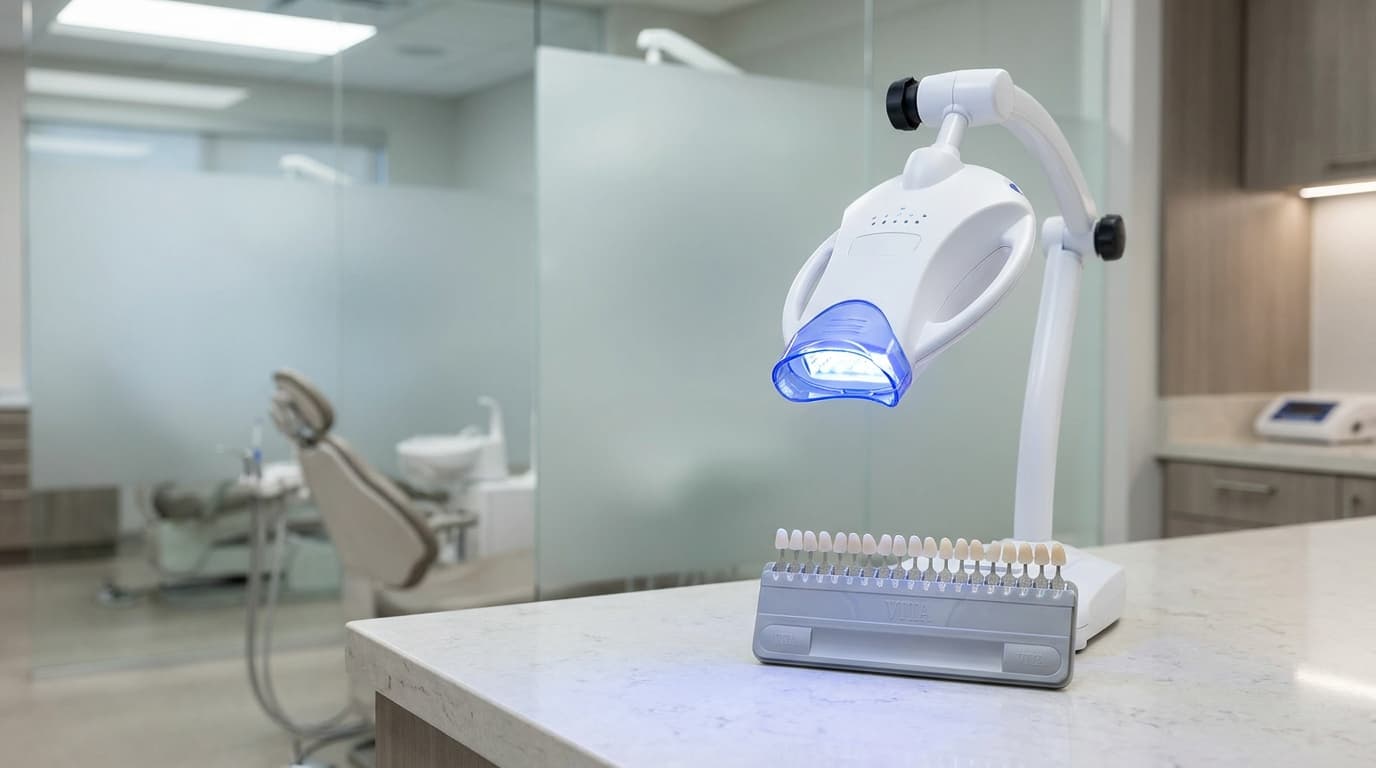
What professional teeth whitening is
Professional whitening is lightening the enamel by several shades under a dentist's control. Unlike home pastes and folk methods, clinical whitening gives a noticeable, predictable result and, most importantly, is done safely — protecting the gums and monitoring the enamel.
Why enamel darkens
Tooth colour changes for various reasons:
- coffee, tea, red wine and other staining products;
- smoking;
- age-related enamel changes;
- insufficient hygiene and plaque;
- some medications and individual factors.
Part of the darkening is removed by professional cleaning, part by whitening. The doctor decides what suits you after an exam.
Types of whitening: in-office and at-home
There are two main approaches. In-office whitening is done in the clinic in one visit — a special gel is activated by a lamp and the result is visible immediately. At-home whitening uses custom trays and gel that the patient uses at home as prescribed. They are often combined for a lasting effect.
How whitening works in the clinic: stages
- Exam and preparation. The doctor checks the teeth and gums and, if needed, does tooth treatment and professional hygiene.
- Protecting soft tissue. The gums are isolated so the gel doesn't irritate them.
- Applying and activating the gel. The whitening compound is applied and activated by a lamp.
- Assessing the result and care recommendations.
Is it painful and safe for enamel
Professional whitening under a doctor's control is safe for enamel. Sometimes temporary sensitivity appears after the procedure — this is normal and passes within a few days. It is important that a specialist performs whitening: aggressive DIY methods can harm enamel and gums.
How long the effect lasts and how to keep it
The result usually lasts from a few months to 1–2 years, depending on diet, habits and care. To keep it longer:
- limit coffee, tea, wine and other staining products;
- quit smoking;
- brush twice a day;
- have professional hygiene every 6 months.
Who whitening is not suitable for
Whitening is not recommended in some conditions: pregnancy, significant gum disease, badly damaged enamel. If the colour is strongly changed or there are chips, veneers sometimes look more aesthetic. The doctor chooses the exact solution. Book a consultation.