
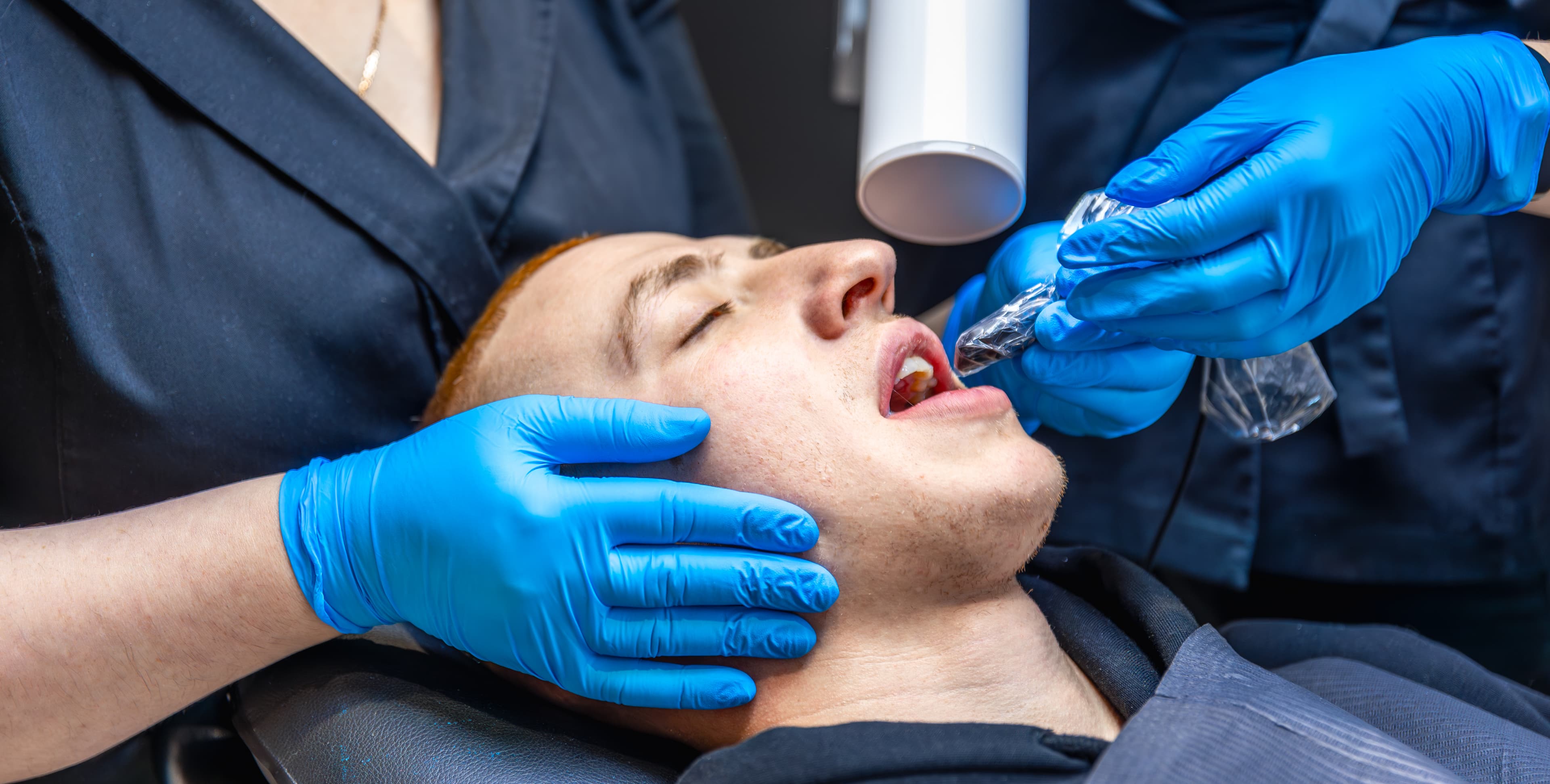
When braces are needed
Braces are a fixed orthodontic system that aligns teeth and corrects the bite. They solve not only aesthetic but also functional problems: a wrong bite overloads teeth, hinders chewing and over time leads to damage.
Braces are recommended when:
- teeth are crooked or crowded;
- there are gaps between teeth;
- the upper and lower jaws don't meet correctly;
- you want to improve both appearance and dental health.
The suitable age and treatment option are determined by the orthodontist. Braces are usually placed from age 12, and they also suit adults.
Types of braces: metal, ceramic, sapphire
All braces work on the same principle but differ in aesthetics and price:
- Metal — the strongest and most affordable, but visible.
- Ceramic — matched to tooth colour and less noticeable.
- Sapphire — clear, almost invisible, a premium option.
Which option suits you is determined after an exam. More on the braces installation page.
How braces treatment works: stages
- Consultation and diagnosis. Exam, images and molds, a plan.
- Preparation. Professional hygiene and, if needed, tooth treatment.
- Braces placement. The system is fixed onto the teeth.
- Adjustment. Regular visits for tightening — about once a month.
- Removal and securing the result with a retainer.
How long treatment lasts
On average, braces treatment takes from 6 months to 2 years. The exact time depends on the complexity of the case, age and how closely the patient follows recommendations. Interrupting treatment and missing visits lengthens the process.
Is wearing braces painful and how to adapt
Placing braces is painless. In the first few days and after each adjustment mild discomfort is possible — a normal reaction to the pressure that moves the teeth. It passes quickly, and soft food and the doctor's advice make adaptation easier.
Caring for braces
- brush after every meal;
- use a special brush, interdental brushes and an irrigator;
- avoid hard and sticky food;
- don't skip scheduled orthodontist visits.
What to do after removal: retainers
After braces are removed, teeth tend to shift back. To secure the result, the doctor fits a retainer (an invisible wire behind the teeth) or prescribes a clear tray. This is an important stage. For children, separate children's dentistry is available. Book an orthodontist consultation.