Many patients ask: “Why can’t I just get another filling?”
But in some situations, a regular filling is no longer enough.
especially when secondary decay develops.
What is secondary decay? Secondary decay is decay that appears under or around an old filling.
In such cases:
- the old filling must be removed
- damaged tissue is cleaned
- the tooth becomes smaller
as a result, the tooth walls become thinner.
Why is this dangerous? A weakened tooth cannot handle chewing pressure, may crack, or may break.
especially in teeth with large fillings.
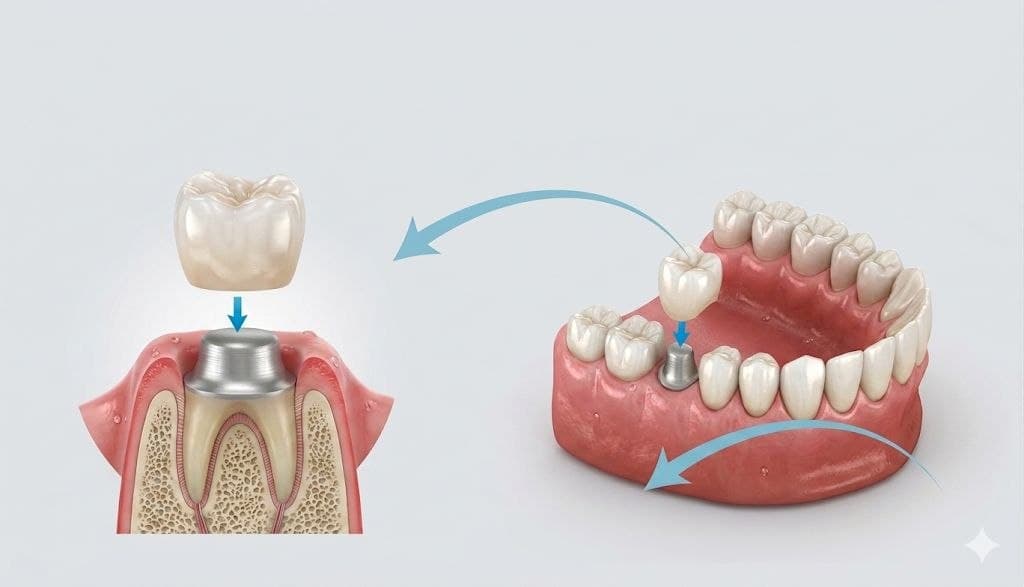
When is a dental crown recommended? In these situations, dentists recommend a crown to save the tooth.
A dental crown:
- fully protects the tooth
- evenly distributes pressure
- reduces the risk of fracture
- lasts for many years
most importantly, it helps preserve your natural tooth.
Why is a crown important? Many people think crowns are only for aesthetics.
But actually:
the main purpose of a crown is to protect a weakened tooth.
Without timely treatment:
- the tooth may break
- it may need to be removed
- implants or complex treatment may become necessary
that is why early treatment is important.
How long does a crowned tooth last? A properly made crown:
- can last for many years
- restores chewing function
- protects the tooth
- improves daily comfort
most importantly, your natural tooth is preserved.
Difference between a filling and a crown
Filling:
- used for small damage
- restores part of the tooth
Crown:
- recommended for heavily damaged teeth
- fully covers and protects the tooth
the best option depends on the condition of the tooth.